Saturday, September 11, 2010

Climbing in Zion National Park


Zion Canyon has the most big walls in the United States and is arguably the country's most beautiful big wall and multi-pitch free climbing destination. There are hundreds of Grade IV climbs in the 800-1500 foot tall range and more than a few taller than 2000 feet. Some climbs are "sport wall climbs" meaning there is almost no approach and you can bail at any point on solid anchors. Other climbs involve intense bushwhacking through cactus-covered slopes followed by massive commitment on a week-long climb followed by a nasty descent. And of course, there are a lot of climbs in between these two extremes.

What stands out about Zion is just how many vertical 1000+ walls there are. Zion Canyon is a similar size as Yosemite Valley. However, while Yosemite has just a dozen vertical big walls with a lot of low angle terrain and forest in between, almost the ENTIRE Zion Canyon is bordered by big walls ranging between 800-2500 feet in height. There are hundreds and hundreds of tall rock climbs and nearly endless cragging possibilities. What stands out about the free climbing in Zion is how wildly varied the cracks are. You can climb face holds on bullet-proof dark varnish (similar to Red Rocks) or jam straigh-in parell sided cracks (similar to Indian Creek).

Turnagain Arm - Alaska


Friday, September 10, 2010

Auschwitz Concentration Camp


The Auschwitz concentration camp complex was the largest of its kind established by the Nazi regime. It included three main camps, all of which deployed incarcerated prisoners at forced labor. One of them also functioned for an extended period as a killing center. The camps were located approximately 37 miles west of Krakow, near the prewar German-Polish border in Upper Silesia, an area that Nazi Germany annexed in 1939 after invading and conquering Poland. The SS authorities established three main camps near the Polish city of Oswiecim: Auschwitz I in May 1940; Auschwitz II (also called Auschwitz-Birkenau) in early 1942; and Auschwitz III (also called Auschwitz-Monowitz) in October 1942.

Dachau Concentration Camp


Thursday, September 9, 2010

Salsburg, Austria - Photos and Photos of the Salt Mines


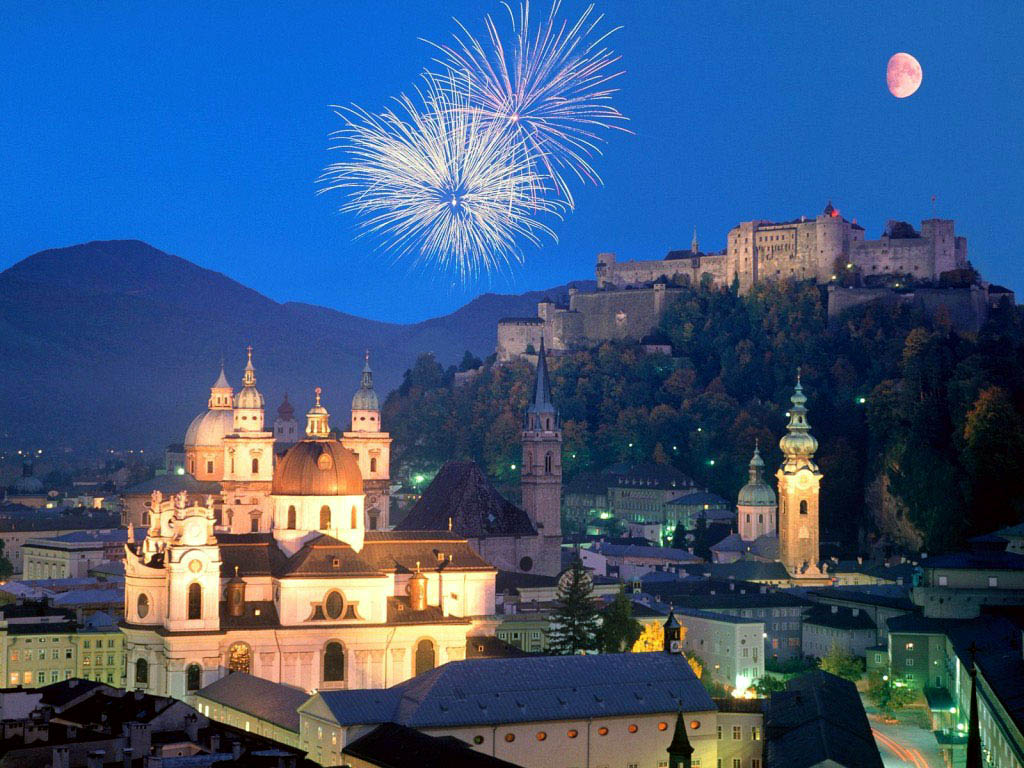
Salzburg, Austria

Today we headed to Salzburg Austria to the Salt Mines of Halein. It seems 250 million years ago slat deposits were formed by the sea and over the course of the formation of the alps enclosed then in rock and the Durrnberg Salt Mountain was formed. We took a tour of a former working salt mine. After purchasing our tickets and adorning our white jumpsuit to protect our clothing we entered the Salzwelten through the Obersteinberg tunnel. We went on a pit railway where we loaded onto seats and a train took us in about 400 meters. The train was fast and fun, basically we straddled a beam and we whisked through a narrow tunnel. Next we were shown a humorous film describing how the salt deposits were formed and How under Prince Archbishop Wolf Dietrich, around 36,000 tons of salt were mined each year. The total length of the galleries within the Durrnberg mining area is around 15 kilometer and spans into Germany, in fact while we were walking on our tour it showed us where we left Austria and went into Germany. Salt mining was terminated in 1989 which it was not economically cost effective any more.

For the miners to be able to get to work quickly they used slides. We actually got to ride down these slides. The fist side was 27 meters long and steep. You definitely picked up some speed on this slide. Basically you go two at a time and you sit astride a double sliding bar stretching out your legs on both side. Then you lift your feet hold onto the person in front of you and let gravity take it's toll. If you don't want to slide you can always walk down the stairs. I do however recommend the slide it is great fun.

There is around a kilometer of quick pace walking on this tour through marrow shafts and some are not lighted very well. I discovered that if you stay between the rail lines where the carts went it is pretty easy to stay on track. This is also the most level ground. Next we walked to an area where we learned about old mining traditional pick and axe mining techniques. The idea of Solution mining came about were they flooded caverns with water to leach the salt out of the rock. To show this as an example we took a ferry across a salt lake, there was great video showing mining on the walls as we passed.